Meta Title
Prong Collar Guide 2025 – Benefits, Safety Tips & Best Ways to Train Your Dog
Meta Description
Discover how a prong collar works, safety tips, benefits, mistakes to avoid, and expert dog-training advice. Learn whether a prong collar is safe, when to use it, and how to get fast results without hurting your dog.
Prong Collar: The Complete Training Guide for Safe & Effective Dog Training (2025 Edition)
Introduction
Dog training can feel exciting and frustrating at the same time. Whether you own a stubborn German Shepherd, a hyperactive Husky, or a strong Pit Bull, controlling leash pulling becomes a real challenge. That is why many dog owners search for solutions like a prong collar. But confusion, fear, and misinformation often surround this training tool. Some believe a prong collar is cruel, while others say it is a life-changing device for better communication with dogs. So who is right?
In recent years, dog owners, trainers, and behavior specialists have started looking at prong collars with a new perspective. Instead of calling them “punishment tools,” many view them as communication tools—when used safely and correctly. Today’s prong collars are designed to mimic natural dog corrections, distribute pressure evenly, and prevent neck injuries caused by traditional choke chains. In this detailed guide, you will learn what a prong collar does, how to use it safely, which dogs benefit from it, and the most important mistakes to avoid.
What Is a Prong Collar?
A prong collar, also known as a pinch collar, is a dog-training collar made of metal interlocking links. Each link has rounded blunt prongs that rest around the dog’s neck. When a dog pulls, the collar applies gentle, even pressure, signaling the dog to slow down. The design prevents choking because it tightens evenly across the entire neck—not just the trachea.
Why Was the Prong Collar Invented?
- To prevent airway damage
- To stop aggressive leash pulling
- To assist in behavior management
- To provide clear communication signals
The prong collar is widely used by:
- Professional dog trainers
- K9 handlers
- Police units
- Military dog units
- Service-dog trainers
Their use in demanding environments proves that the collar is not torture—it is training engineering.
How Does a Prong Collar Work?
The prong collar works through pressure and release.
- Pressure when the dog pulls
- Release when the dog relaxes
This creates instant feedback, teaching the dog that staying close to you is easier and more rewarding. In dog language, this is similar to how a mother dog corrects puppies—gentle mouth pressure.
Is a Prong Collar Cruel?
This is the most common question.
The short answer: A prong collar is not cruel when used correctly.
Harsh tools become harmful in the wrong hands. Even a regular collar can choke a dog if misused. Surprisingly:
- Prong collars protect the windpipe
- Prevent neck trauma
- Reduce long-term spinal pressure
The key lies in:
- Correct sizing
- Correct placement
- Correct leash handling
- Correct training timing
A calm owner = a calm dog.
Benefits of Using a Prong Collar
Using a prong collar can deliver fast and safe results when done correctly.
✔ 1. Better Leash Control
Strong breeds can injure shoulders, elbows, and backs due to constant pulling. A prong collar gives:
- Stability
- Walking confidence
- Balanced communication
No more wrestling matches during walks.
✔ 2. Prevents Choking
Flat collars push pressure into the throat.
Prong collars distribute pressure around the neck.
Better oxygen flow = safer training.
✔ 3. Ideal for Stubborn Dogs
Breeds that respond well:
- Huskies
- Malinois
- German Shepherds
- Pit Bulls
- Rottweilers
- Dobermans
Dogs that ignore flat collars respond quickly to prong cues.
✔ 4. Helps Reactive Dogs
If your dog lunges at:
- Cars
- Bikes
- People
- Other dogs
A prong collar helps redirect attention quickly.
✔ 5. Speeds Up Training
Most owners see improvement within:
- First session
- First week
- First 30 days
Why? Because a prong collar communicates clearly.
Common Myths About Prong Collars
❌ Myth 1: Prong Collars Cause Pain
Reality:
Modern prongs have rounded tips engineered for safety. They rely on pressure—not pain.
❌ Myth 2: Prong Collars Make Dogs Aggressive**
If aggression increases, the issue is:
- Fear
- Misdirection
- Poor handling
Not the collar itself.
❌ Myth 3: Only “Bad Owners” Use Them
Many trained professionals use prong collars responsibly.
How to Fit a Prong Collar Correctly
Proper fit is everything.
Follow these guidelines:
Placement
- High on the neck
- Under the jaw
- Behind the ears
Tightness
- Snug fit
- Not hanging
- Should not slide down
Link Size
Choose based on dog weight:
- Small links: Small breeds
- Medium links: Medium breeds
- Large links: Strong, muscular dogs
Never Buy Too Large
A big collar creates sharp pressure. Correct size protects your dog.
How to Introduce the Prong Collar to Your Dog
Step-by-step:
Step 1: Let the Dog Smell It
Dogs trust familiar objects.
Step 2: Associate It With Treats
Reward calm acceptance.
Step 3: Practice Indoor Walking
Short 3–5 minute walks.
Step 4: Move Outdoors
Increase distractions slowly.
Step 5: Keep Sessions Short
Training should feel like fun, not punishment.
Best Commands to Train With a Prong Collar
- Sit
- Heel
- Wait
- Look
- Leave It
- Stay
The prong collar reinforces these commands easily because it redirects the dog’s attention fast.
Who Should NOT Use a Prong Collar?
Avoid use on:
- Puppies under 5 months
- Tiny toy breeds
- Dogs with neck injuries
- Fear-aggressive dogs without pro guidance
For these cases, consider:
- Martingale collars
- Front-clip harnesses
- Head halters
Safety Tips for Using a Prong Collar
- Never yank the leash
- Use gentle pressure
- Never leave the collar on unattended
- Remove indoors
- Check skin regularly
- Combine with rewards
A prong collar works best with:
- Treats
- Praise
- Toys
Training is teamwork.
Mistakes to Avoid
❌ Pulling Continuously
The prong collar is for quick feedback, not constant pressure.
❌ Using Emotion
Stay calm—no anger.
❌ Using It Without Training Goals
Tools require guidance.
❌ Ignoring Rewards
Positive reinforcement keeps the dog confident.
Prong Collar Vs Choke Chain
Choke Chain
- Tightens around throat
- Restricts breathing
- Increases anxiety
Prong Collar
- Applies even pressure
- Safer on trachea
- Faster correction
Clear winner: Prong collar.
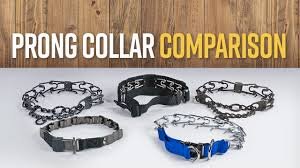
Types of Prong Collars
1. Standard Metal Prong
Most common and adjustable.
2. Quick-Release Prong
Easy to remove quickly.
3. Plastic-Tipped Prong
Gentlest touch, great for beginners.
4. Neck-Tech Stainless Prong
High-end model with stylish engineering.
Signs Your Dog Is Comfortable
- Tail relaxed
- Ears neutral
- Loose leash walking
- Focus on you
- Calm breathing
Signs of discomfort:
- Whining
- Head shaking
- Scratching at collar
Adjust fit if needed.
Positive Reinforcement + Prong Collar = Faster Results
Modern dog training combines: Marker words (“Yes”), treats, timing, body language.
A prong collar only guides—your praise teaches.
Prong Collar for Behavior Problems
It helps correct:
- Jumping
- Leash pulling
- Lunging
- Herding behavior
- Dominance
- Hyperactivity
But do not use it to punish fear or trauma.
When Should You Stop Using a Prong Collar?
Once your dog:
- Heels naturally
- Stays focused
- Ignores distractions
- Walks calmly
You can transition to:
- Flat collar
- Martingale
Prong collars are a path, not a life sentence.
Buying Guide: How to Choose the Best Prong Collar
Look for:
- Stainless steel
- Smooth round prongs
- German engineering (Herm Sprenger recommended)
- Quick-release feature
Cheap copies cause skin irritation—avoid them.
Cleaning & Maintenance
- Wipe after walks
- Use mild soap
- Dry completely
- Check links regularly
A clean collar = longer durability.
Two-Paragraph Conclusion
A prong collar is one of the most powerful communication tools ever designed for dog owners. It helps transform chaotic walks into enjoyable training experiences. When used correctly, it protects the dog’s neck, reduces leash pulling, prevents injuries, and speeds up learning. The goal is always safety, confidence, and harmony—not pain. Training is like language; the prong collar gives you a clearer way to “talk” to your dog.
However, a prong collar is not magic. It must be paired with patience, rewards, calm behavior, and correct placement. Responsible dog owners introduce it slowly, watch their dogs carefully, and adjust based on comfort and behavior. When treated with respect, this collar becomes a bridge between owner and dog—building trust, obedience, and joyful walking. Use it wisely, and you will unlock a confident, balanced, and well-behaved dog.
Frequently Asked Questions (FAQs)
1. Does a prong collar hurt dogs?
No—when fitted and used properly, it uses gentle pressure.
2. Can puppies use a prong collar?
Only older pups (5+ months) under trainer supervision.
3. How long should a training session last?
3–10 minutes for beginners.
4. Can my dog wear a prong collar all day?
No. Use only for training and walks.
5. Which brand is best?
Herm Sprenger is widely respected for quality and safety.
6. Can aggressive dogs use a prong collar?
Yes—with professional guidance.
7. Do vets approve them?
Many do, especially for strong pullers.
8. Will a prong collar stop pulling immediately?
Often yes—results can appear on day one.
If you want, I can also: ✅ design internal linking strategy
✅ add schema FAQ markup
✅ create blog image alt-tags
✅ write product comparison tables
✅ provide social captions
Just tell me! 😊